The world's leading manufacturer of precision hardware products
Has decades of rich experience and advanced equipment
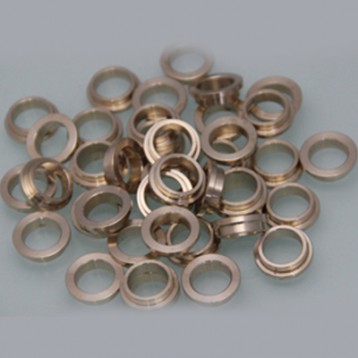
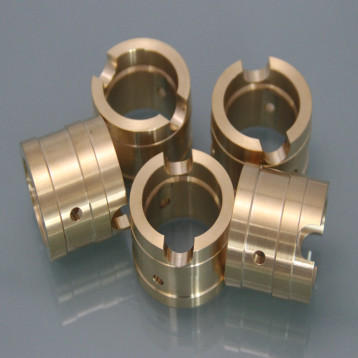
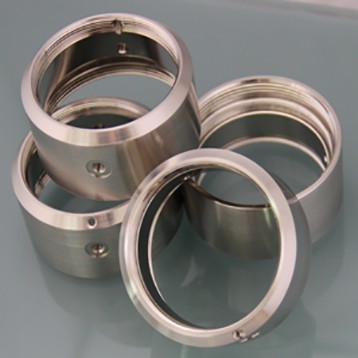
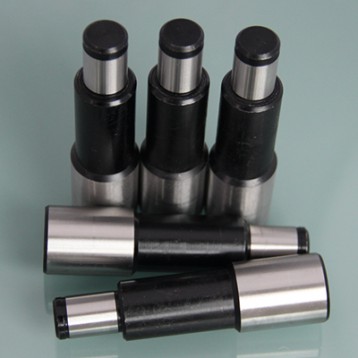
The Brass Bush (also known as a brass bushing or plain bearing) is one of the most fundamental and widely used components in mechanical engineering. It is a cylindrical sleeve designed to provide a low-friction bearing surface for rotating shafts, sliding rods, or pivoting pins. Manufactured from high-grade brass alloys, these bushes offer an excellent balance of strength, corrosion resistance, and natural lubricity, making them the go-to choice for engineers seeking a reliable and cost-effective solution for motion control and component alignment.
We manufacture a wide variety of brass bush geometries to suit different mounting configurations and load requirements:
Plain Cylindrical Bushes (Sleeve Bushes): The most common type, featuring a simple straight cylindrical design for general-purpose applications where radial loads are present .
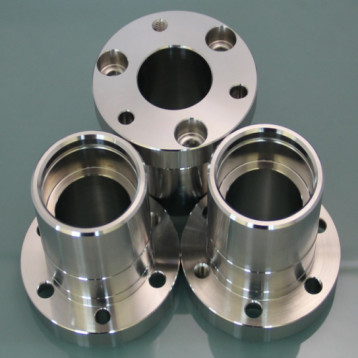
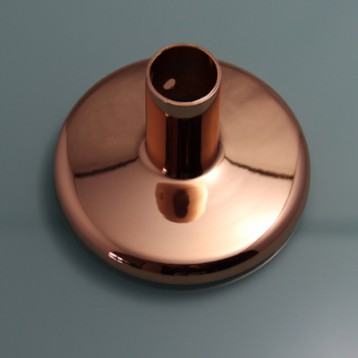
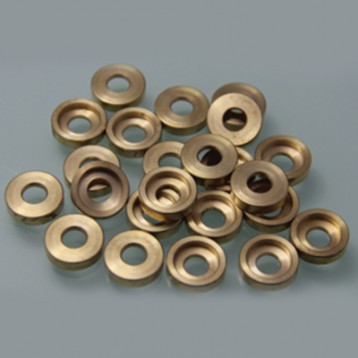
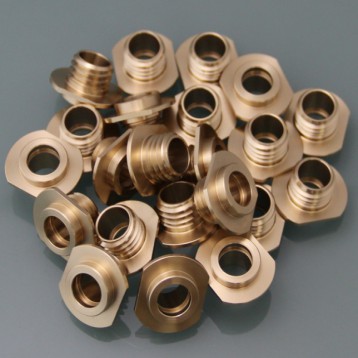
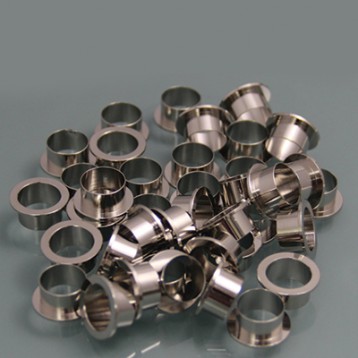
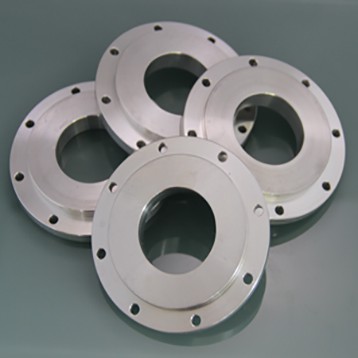
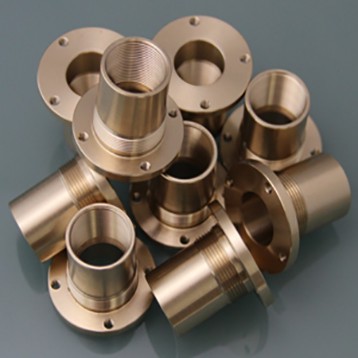
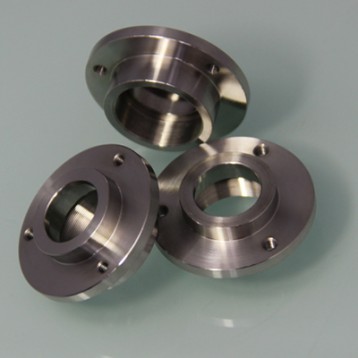
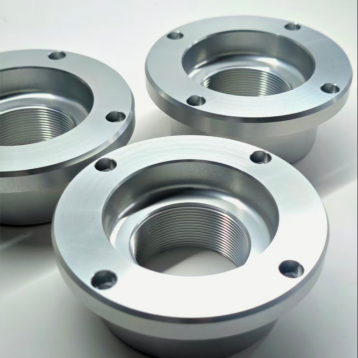
Flanged Bushes: A cylindrical bush with a radial flange at one end. The flange acts as a built-in thrust washer, allowing it to handle both radial and light axial (thrust) loads while also serving as a positive location stop during assembly .
Thrust Washers: Flat, disc-shaped bushes designed specifically to manage axial loads along the axis of a shaft.
Graphited / Oil-Impregnated Bushes: Brass bushes with embedded graphite plugs or oil-impregnated sintered layers. These are designed for applications where maintenance is difficult or where external lubrication is not possible, providing self-lubricating properties .
Slipper / Half Bearings: Semi-cylindrical bushes used in specific applications like connecting rods in engines or heavy machinery.
Brass is a preferred material for bushes due to a unique combination of metallurgical properties:
Inherent Low Friction: Brass has a naturally low coefficient of friction against steel shafts. This reduces heat generation and wear, ensuring smooth and quiet operation .
Excellent Machinability: Brass alloys (such as C36000 or C38500) are among the easiest metals to machine. This allows for the production of bushes with precise tolerances, complex features, and excellent surface finishes at a competitive cost .
Corrosion Resistance: Brass offers good resistance to corrosion from moisture, air, and many industrial fluids, ensuring a long service life in demanding environments .
Good Thermal Conductivity: Brass efficiently dissipates heat generated by friction away from the bearing surface, preventing overheating and premature failure .
Anti-Galling Properties: When run against a steel shaft, brass is less likely to "weld" or seize compared to other metals, providing a safer failure mode .
Creating a high-quality brass bush involves a precise machining process to ensure perfect concentricity and fit:
Material Selection: High-quality brass rods, bars, or tubes are selected based on the required alloy (e.g., C36000 for free machining, C93200 for high strength).
CNC Machining: The bush is machined on high-precision CNC lathes.
Outer Diameter (OD) Turning: The external surface is machined to ensure a tight, accurate press-fit into the housing.
Inner Diameter (ID) Boring: The internal bore is precision-machined to provide a smooth, consistent bearing surface with tight diametral tolerances.
Facing: The ends are faced to achieve the exact length required and ensure squareness.
Feature Creation: For flanged bushes, the flange is machined. Other features like oil grooves, lubrication holes, or grease pockets can be added using specialized tooling.
Deburring: All sharp edges are carefully removed to prevent damage during handling and to ensure safe assembly.
Finishing & Quality Control:
Dimensional Inspection: Each batch is inspected using micrometers, bore gauges, and pin gauges to verify dimensions.
Surface Finish: The final surface finish is verified to ensure optimal friction performance.
Packaging: Bushes are cleaned and packaged to prevent corrosion during storage and transit.
Brass bushes are ubiquitous in machinery and equipment where rotating or sliding motion occurs:
Automotive: Gearbox selector forks, pedal pivots, clutch linkages, suspension components, and starter motor bushes .
Agricultural Machinery: Pivot points in tractors, harvesters, and balers where dirt resistance and reliability are key .
Marine Equipment: Steering linkages, throttle controls, and hatch mechanisms where corrosion resistance is critical .
Industrial Machinery: Conveyor rollers, printing presses, textile machines, and packaging equipment .
Hydraulics & Pneumatics: Pivot points for cylinders and guide bushes for valve stems .
Plumbing & Valves: Guides for valve spindles and taps .
Construction Equipment: Hinge points on excavators and loaders .
To maximize the life and performance of a brass bush, consider the following:
Housing Fit: The outer diameter of the bush is typically designed for an interference fit (press-fit) within the housing to prevent rotation or movement .
Shaft Clearance: A small amount of running clearance is required between the shaft and the inner diameter of the bush. This allows for a lubricant film to form and accommodates thermal expansion .
Lubrication: While brass has inherent lubricity, most applications benefit from regular lubrication. Features like grease grooves or oil holes can be incorporated into the design to facilitate this .
Surface Hardness: For optimal performance and minimal wear, the mating shaft should ideally be harder than the brass bush (e.g., a hardened or ground steel shaft) .
Material Certification: We provide Material Test Reports (MTRs) verifying the chemical composition and mechanical properties.
Dimensional Accuracy: Tolerances can be held as tight as H7 for the bore and h6 for the outer diameter, ensuring a precise fit.
Concentricity: Strict control over wall thickness ensures that the bore remains perfectly concentric with the outer diameter, preventing uneven wear.




.jpg)